Showing posts with label movies. Show all posts

04 May 2011

more than a handful

Yesterday was the birthday of Christina Hendricks, which occasion prompted a debate on Slog (and probably other places on the internet) about whether her breasts are real.  Hendricks is currently most famous for her role as Joan Holloway on Mad Men, a show which has been continuously and effusively praised for its artifice.  She also has the dubious privilege of being the go-to centerpiece for any hand-wringing think-pieces about body image in Hollywood, being at once almost impossibly beautiful and constructed at a scale that makes her co-workers look like snappable dolls.  This generally means that discussion of her dimensions will begin in the opening paragraph of the article itself, rather than with the first comment.

It's niggled at me for a while, this question of real breasts.   The term sounds like it ought to apply to people whose tits have been altered in the digital realm, right?  Breasts which are literally imaginary.  But no, someone whose breasts are unreal is a person who's pursued surgical implantation.

Implants are a job requirement for a bunch of female professions, let's admit that up front.  Natural breasts are untidy, usually asymmetrical, and behave like sacs of fatty tissue in motion.  Women generated with reference to some kind of Platonic ideal, as befitting fantasy industry professionals, should have breasts which remain conic as their hosts bounce around and fail to age.  And so women who want to do these jobs are gently but firmly coerced into submitting to horrifying surgery.

As a society, we tend to consider implantation (as well as less aggressive forms of fantasy-conformation, e.g.) to be dishonest, immoral.  So you have vehement fights in which one party feels they are defending the honor of a beloved figure by claiming that she would never be so awful as to physically change her body for acting, while the other party believes they're performing a public service by revealing a base fraud.


The problem is that our judgement of a real person who works in the dream factory implicitly compares her to the fantasy creations she's helped present, and the real woman--however plastic she may be--is inevitably found wanting.

02 September 2010

Mannequins with Kill Appeal

"It only got a 30?!  You're shitting me."
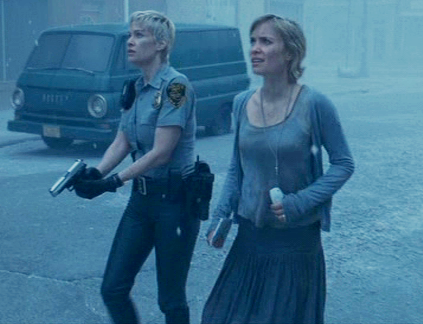
There's nothing for it: I've got to stump for the redemption of the film version of Silent Hill.  This is a movie, and I can't stress enough how unusual this is for me, where I had put it on in the background while I gazed into the internet but then found myself more and more drawn to the film and actually put the internet to one side altogether so I could watch it closely.  After it finished, I returned online again to look up the reviews, which I vaguely recalled being bad.  I was wrong: the reviews of this movie eviscerated it.  They are literally worse than Gothika.

I don't know if it had been a disappointing summer and all the critics were hot and angry or what, but there are far more deserving targets that received an indulgent pass while Silent Hill was getting its neck stomped.  I daresay there was an aspect of revenge in it: TriStar refused advance screenings, to mitigate an expected poor response, and critics clearly jumped at the chance to punish this behavior.  Horror is not the genre to work in if you're hung up on critical acclaim in any case, but when 28 Weeks Later, Shadow of the Vampire, and THX 1138 get scores in the 70s on Metacritic while Ravenous, Final Destination, and Saw have scores in the 40s, some metric other than quality of filmmaking is clearly being drawn on to evaluate them. 

I must say, first, that I have never played through a Silent Hill game, because they are scary and I get scared.  I can't, therefore, relate to some people's experience of the film as a betrayal of the franchise, comparing it against the film that should be there.  I have the luxury of only being able to evaluate what is there.

I NEED AN ADULT
I don't mean to argue that Silent Hill is a very good film, heavens no.  I'm quite comfortable losing that argument.  It just has much to recommend it and is, though this is faint praise indeed, a standout among video game adaptations.  The critical perspective I draw on which rewards me richly when I watch Silent Hill is a feminist critique, something that's still fairly thin on the ground in movie review circles.  It's very much a women's picture, if such a thing still exists: all of the characters save those inserted at the behest of execs are women; the horror is that classically feminist style, body horror; it doesn't use women's suffering primarily to titillate a presumed male gazer, as Gothika does; and, as in Aliens, it's not so much big dumb guns as motherhood that saves the day.  As far as I'm aware, no marketing to a specifically female demo was attempted: the trailers just about reproduce Sean Bean's role in full, the way the marketing for Scream was cut to suggest that Drew Barrymore survived the credits. 

The storyline is a regular ghost one, revenge/justice for a female victim of patriarchal violence and social ostracism, here with heavyhanded religious overtones that do little besides absolve the viewer of responsibility for the mistreatment of women unless they're a member of a Christosatanic cult.  The town and its horrors are explicitly manifestations of the psyche of this ur-victim.  Frankly, I'd rather have it that way than how supernatural elements are manifest in most horror films, where characters devised specifically to treat a protagonist's experiences of non-materialistic phenomena with skepticism are then punished for their disbelief with grisly death.  Here the grisly death is distributed much more impartially, which is always refreshing. 

The main thing going for Silent Hill outside of its feminism is its atmosphere.  All the exteriors are dampened in a gray-white mist where black ash falls from the sky like snow, and all the interiors have the perfect quality of urbex in a dying steeltown.  The town itself is based on the story of Centralia, Pennsylvania, but I can't help but think Roger Avery missed a trick (one of, you know, many) not writing it as a more explicit portal to hell.  The monsters have been designed from the principle of the uncanny valley, and I can't think of an instance where it's been used more pitch-perfectly, except maybe Gore Verbinksi's version of The Ring, another female-focused atmospheric horror. 

Generally the film is about mothers and daughters, which may explain the low level of sexualization experienced by the cherubic Radha Mitchell as main/final girl Rose.  Her companion for most of the film, Laurie Holden's Officer Cybil, has a cop-appropriate blatant lesbian image.  She's sexualized, but as a sleek muscular object along the lines of Robert Patrick halfway through unmelting himself in T2.  The rest of the film's sex is tied up in Pyramid Head, here a straightforward avatar of rape, and the mannequinesque nurses, whose forest of bared cleavage Rose has to cautiously pick her way through lest she be torn to ribbons.

"I would have liked more time with the cleavage nurses
and less with the religious fanatics."
Now, I think Tycho's a hundred percent correct when he says that the style of the film evokes the style of video games.  I've seen just about all the video game movies, and I've played a fair amount of survival horror, and I've seen a fuckton of cutscenes.  And the quality of cutscenes is this: they contain a lot of bad, clunky exposition, and they contain a lot of visual spectacle.  Their function is to provide a break in the action which briefly suspends the player's control in the interest of advancing the plot.  Silent Hill retains the cutsceneness closely enough that I kept feeling like I ought to be pressing X.

I don't put much stock in the idea of faithfulness as a measure of the quality of an adaptation--who wants to hear a cover of a song identical to the original, anyway?--but I have love for films that have love for their source.  Christopher Gans spent years trying to obtain the rights to Silent Hill, going so far as to create his own fan-film scored with the Silent Hill soundtrack and send it to the game's creators.  Aided by this purity of feeling, he's produced something that expresses the spirit of, if not the games themselves (for how can I judge that), the medium and the genre they spring from.  The whole idea of survival horror is that you are resource-poor and nearly powerless in a landscape designed to do you harm, and from themes to sets to characters, the movie carries this idea through wonderfully. 

I can't say I don't feel a little hurt that Silent Hill was panned so especially badly, because the symbolic language it used was so close to my own experience of feminine terror, and so keenly expressed.  When I read through mainstream reviews, I can see that none of that has come through for most reviewers, and as usual with an adaptation (especially from a devalued medium), a number of them have felt free to just make shit up to pretend familiarity with the source, like when Roger Ebert wrote that the brilliant colors of From Hell closely evoked the graphic novel.*  Fans of the game are also very angry at the ways in which it differed from the movie that happened in their minds, but that kind of bitching has been easier to write off since Watchmen.  When I look at amateur reviews, such as this one from the Bechdel Test site, though, I get the feeling that I'm not the only one who sees the value in it. 

"30, though!  What the fuck."
*Maybe I am conflating him with a different critic, but I swear that someone said this, and Ebert is a critic I have no real issue with slandering in a post that touches on gaming. 

27 August 2010

dreams and the Internet are similar

I didn't know Satoshi Kon.  I suppose that's obvious, but all the same it makes me uncomfortable to eulogize someone based only on his public face.  I've seen nearly all of what he made, though (with the exception of Paranoia Agent and Tokyo Godfathers, which in such a small filmography is a fairly big gap), from Magnetic Rose to Paprika.  I'll tell you this.  The impression he left with every film I saw was of an upward trajectory.  Is it ghoulish to say I wanted to see his very best, to see when he would naturally stop improving his art and exploring his visions, before he died?  I just don't think the body of anime will be as good as it would have been if he'd gotten to become an old granddaddy like Miyazaki. 

24 August 2010

Might stop to holla and pop my collar

I had this plan.  Having, at one point, changed dramatically in my look and style to the point where people who had known me well did not recognize me when I passed them on the street, I developed some interest in the makeover genre of films.  I was going to make myself a project, looking at the styling of all these movies and trying to duplicate the stages the actresses travel through, but in reverse. That is to say, refiguring the films as though they had been about women blossoming from trembling Hollywod beauties into self-possessed awkward-looking freaks. 

Let's be honest, though.  Every Hollywood film is populated with Afters.  It's the Befores that really hold my interest, the films' ideas of what is unacceptable for a woman to look like while still being good enough to look at that people won't flee the theatre.  Among other things, I suppose, it's about making sure the typically perfectly serviceable selves from Before pictures don't remain uninhabited cast-offs, but are thrifted and refurbished as cherished vintage identities.  Also, apparently, I would most like to shoot these costumes as though they were American Apparel ads.  

This image pinched from
the Self-Styled Siren's
excellent post on costuming
she's enjoyed in films. I
do hope she'll forgive me.
Let's start with the granddaddy of 'em all, Now, Voyager.  It is the story of a carved ivory box-maker (Bette Davis) driven to being upset and mildly snippy to a teenager by her vicious and controlling mother, who keeps her locked away to prevent her from doing the things she enjoys (fucking in a car on a boat, like in Titanic).  She's rescued when her sister-in-law hires Dr. Claude Rains, who packs her off on a cruise to reignite her love of  tweezing her brows.  There, she meets some kind of European guy called Jerry (though he is not a Jerry) with a bitch wife and a hysterical, socially awkward daughter, Tina.  Tina is, incidentally, the spitting image of myself at her age. 

After returning home, Charlotte stands up to her mother, who thoughtfully kicks it mid-sentence once Davis has established that the tension of their relationship has run its course.   Charlotte then re-establishes ties with her European cruisemate, who elects to not leave his hateful wife but instead to gift Charlotte with their less popular daughter.  Charlotte promises to love and keep Tina with her always, which is not at all similar to the actions of her controlling mother because Charlotte is, I guess, prettier.

Besides the unusual ending, in which Davis' married love object's wife does not usefully die or depart and she forms a familial bond instead with his similarly distressed daughter, the most interesting thing about Now, Voyager is how it further develops Hollywood's love affair with psychiatry.  Rains is sort of a fairy godmother here, giving Charlotte not only her clothes but a bunch of pseudopsychiatric tips and tricks perfectly worthy of Carson Kressley or Gok Wan. 

Davis' costume when she is introduced seems to have been assembled from a checklist of fashion don'ts of the 1940s, and I've managed to tack on a couple more in my own take on the thing.  Her hair is flat, worn low on her head and parted in the center--later it will be up in a big pompadour.  She's wearing a lot of powder but no eyeliner or mascara, and, unforgivably, glasses, which the movie seems to believe are something that you might eventually grow out of wearing, perhaps if you lose some weight.
Her dress is just a train wreck.  Her mother refers to it as "the black and white foulard", if I'm hearing it correctly, but mine is just cotton.  The skirt length in particular hits at the widest part of her calf, which is said to make your leg look wide.  Mine is cut to my knee.  Davis is also wearing a fat suit, which I don't really have access to, but I can replicate the effect by generally being about thirty pounds heavier than she was in 1942.  I can't really muster anything as well-constructed as her foulard from my wardrobe, fast fashion having taken its toll on the garment industry, but I do have an incredible collection of polka-dots based on an offhand comment my mother made at some point about how dots are good because they attract men's eyes, like men were mynah birds or something.
"What man would ever look at me
and say 'I want you'?!  I'm fat!  My mother
doesn't approve of dieting!  Look at my shoes! 
My mother approves of sensible shoes!"
Unlike films of the 1940s, I am able to muster even an ounce of sympathy for women who don't want a kid but are made to have one anyway, so I can't really get on board with the fire-breathing demon portrayal of either of the two bad mothers Charlotte is set at odds with.  Even the teen who relentlessly trolls Aunt Charlotte seems to my eye to be acting out of a not-uncommon fear that she could become Aunt Charlotte if she doesn't do everything in her power to stave off spinsterity.  Even in films where fucking isn't a big thing, it is extremely important that women be thoroughly fuckable.  That's the main thing in Now Voyager, as in life.  Having myself been convinced already of my fuckability, I am free, free!  Ha ha ha ha ha ha ha!
"I am my mother's well loved daughter. 
I am her companion.  I am my mother's servant. 
My mother says.  My mother!  MY MOTHER, MY MOTHER!"
Here's a special closeup on my makeup, which I love, I don't care what you say.  I think I just about doubled the width of my eyebrows, but I still can't quite match Davis', which appear to be tiny false mustaches. For authenticity, I shouldn't have used mascara, but I did. 

13 August 2010

But I'm Not Bitter Or Anything

The day after Columbine, which hit geographically close enough to home that lessons were canceled for the day in favor of having everyone sit in homeroom and watch the red-faced teacher publicly buttonhole the goth kids to ask them why they were being so weird and whether they had plans to blow us all up, an unusual thing happened to me.  It was at lunch, in the cafeteria, where because I had transferred to the school in the third of the three years one spends at middle school, and because I had zero social skills or charisma and was so unfashionable that dogs bark at me as I halt by them, I usually sat in a far corner with two Jehovah's Witnesses, Kevin, a sad roly-poly bullying victim I could never politely get rid of, and Erica, a girl who would alternately hit me and try to touch me up.  It was this day, sitting there, when one of the popular girls approached the table. 

I've seen Mean Girls and I'm still not quite sure I have a handle on what "popular" means.  It doesn't seem to mean that many people like you; I guess it's meant to have something to do with occupying a coveted spot in the hierarchy.  There were some girls I liked and wished I was their friend and considered popular, though whether they were or not I will never know.  There was Michelle, who was chubby and had cropped dyed-black hair but wore lots of eyeliner and jewelry and had an amazing singing voice.  She was supposedly "easy" but then as now that designation didn't make a lot of sense to me and simply served to lend her a mystique.  And there was Jennifer, who was a plain-faced sport billy and student council member who was unfailingly nice to everyone.  This was neither of those girls, but some other person who, because I've never committed her name to memory, I'll call Claire Bennet. 

I had a class with Claire, in which she mostly distinguished herself with a sneering air towards the idea of knowing anything, and a Palinesque smugness when presenting her class projects that I assume came from how secure she was in the knowledge that nothing she did academically would affect the real parts of her life.  She was also quite mean to both teachers and students.  To my knowledge, before she approached my table, I had never personally interacted with her and had no indication that she was aware of my existence.  I was basically aware of our different positions in the hierarchy, hers being "popular" and the most common appellation I'd heard for myself being "dirty", as in "why would you want to hang out with the dirty kids".  So when she approached me I already disliked her and doubted her intentions. 

It transpired that, following the massacre, Claire was having some kind of crisis of conscience that was prompting her to try and stop the next school shooting by reaching out to the down-and-outs and inviting them over to her table and presumably at some point re-enacting the makeover scene from films.  It had clearly not occurred to her that I would consider spending time in her company as anything but a longed-for privilege, and she reacted with a sudden shower of invective, cursing me and my sort, when I gave her the kind of brush-off she would have given Kevin if he'd asked her out.  She flounced off back to her table, and while I'd like to think she took with her the idea that maybe not everyone wanted to be her, it was probably more along the lines of confirmation that the unpopular deserve every bit of it. 

This is all to say that the scene in The Breakfast Club where Molly Ringwald calmly tells Anthony Michael Hall that the reason he would not diss her to his friends is that "you look up to us" and Hall responds by laughing, crying, and telling her "You're so conceited" seems to be erring a bit on the side of saying that the popular kids are comfortable and settled in their self-images, while it's the nerds who are insecure and over-emotional.  I suppose if Hall had maintained an autistic affectlessness while Ringwald called him diseased and told him she hoped he'd shoot himself in the face with that flare gun, the ending where the outcasts are starting to become just a little more popular wouldn't have seemed like a happy one.

12 August 2010

Platonic Ideals

Last night was the second time I saw this romantic comedy I like very much, and which I liked as much on the second viewing, I Love You, Man.  So this would be about the seventh time I've seen a romantic comedy I liked, counting rewatchings of Addicted To Love and The Truth About Cats & Dogs.  When I watch a film, the first thing I'm watching is always the writing, and this is about the most expertly written romantic comedy I've seen.  What I mainly have against romantic comedies is the ubiquitous device where what comes between the obviously fated lovers is a misunderstanding that, once the characters actually speak to each other to clarify it, leaves them happily in each other's arms, which annoys me with the implication that they are complete idiots.  I Love You, Man avoids this by having the characters' real actions hurt and grate on each other, but then have them apologise and forgive after an appropriate amount of time.  The way the characters get gradually revealed to each other and to us just makes me really happy.  I suppose I'm especially susceptible to films like this since I have both a great interest in how lonely people are supposed to make friends and how relationships function between men of the same gender. 

There's problems with it too, of course, ones typical of the--UGH--"bromantic" genre: of a cast of intricately bequirked characters, the only one lacking development is the girlfriend, played by the winning (if preppily-clad) Rashida Murphy, whose only apparent characteristic is that while she seems to adore processing issues to help along her fiancée's plot development, she has never engaged and was never planning to engage with him about what he likes in bed.  The guyfriend (played by 250 pounds of Jason Segel in a 180-pound bag), on the other hand, with his...well, I was going to list his character-revealing quirks but they are vast like the ocean--he's fucking fascinated with Paul Rudd's sex life, intent on improving it.  And subsequently intent on introducing breakup-inducing tension into Rudd's romantic relationship. 

Why I bring it up, though, is that I think in the future this will be regarded as an early polyamory film, the same way The Kids Are All Right won't.  The movie treats the relationship between the male leads as nominally nonsexual, but they do tongue each other, and get involved in each others' sex lives in advisory capacities, and the ultimate scene is the two of them repeatedly confessing love for each other before the film zooms out and fades on the straight wedding.  The primary partner's encouragement of the second relationship and subsequent jealousy, the secondary partner's passive-aggression, and all the characters' insistence throughout the film that "what I said to you was supposed to stay between you and me!"--it's textbook. 

While I'm no polyamorist--surely one of the major perks of getting into a longterm relationship is you can stop dating--I think the ideals of communicative honesty, trust, respect and mutual accommodation that polyamory, queer, and BDSM types have built to support nonstandard relationship structures are laudable and should be studied by anyone who wants to be with another person.  And I think that some variation on the relationship structures they're hammering out today will be the future if the arc of the future keeps bending towards sexual tolerance and egalitarianism, which is why it was the subject of the second Futurama movie.  But I could be wrong, and it could be that people are always gonna be more willing to live in some rickety (or "time-honored") prefab structure than go through all the honesty and processing and work it would take to plan and build something to suit themselves.

11 August 2010

Blood & Salt

The things that managed to interest me about Salt (a largely unremarkable entry into what, to me, will henceforth always be the Jack Bauer genre) are, unsurprisingly, gender issues, courtesy of Angelina Jolie.  By the IMDB's account, Tom Cruise was originally attached to play the part of Evelyn Salt, but backed out when he discovered the film would portray him married to the Marxist from The Counterfeiters.  The part was subsequently rewritten for Angelina Jolie, which seems to have mainly involved changing the pronouns.  I approve!  Jolie is a fine actor and high in essential charisma, though I always wish she'd get back up to her Gia weight because right now the way her robust head is set on that tiny, ropey neck makes her look like a spoon.* 

But imagining each scene as it would play with a man of equal height also allowed me to imagine I might be observing something about the culture, something I could later use as a jumping off point for gassing about gender equality in a blog entry.  So: I believe that Tom Cruise's torture scene would have been longer, and I believe the discussion I had in the car driving home wouldn't have been about whether crashing a van into a police car would have snapped Cruise neatly in twain.  I believe, too, that I can back up my belief with comparisons to pretty much all the other 24-style action thrillers, which depict with loving detail the suffering of their leads.  To keep this fairly brief let's just take it as read. 

It would be usual to follow this line down a regular feminist argument: women are presented in media as weaker than men in their ability to withstand pain, when in fact blah blah childbirth, oorah.  I feel that, besides being the kind of bullshit that social conservatives use to argue that men and women may have their separate spheres, but each is of equal importance and equally fulfilling, this argument is just missing something.  I can't truly blame anyone for missing it, because, pardon me for getting all Morpheus here, we're soaking in it.   What we've become blind to by its constant naturalization in basically all media is violence against men, aka "violence". 

Men are constantly situated in media as the ideal subjects of violence.  I'm not saying there's not also an agenda running in some Hollywood films of punish-the-feminine; that would be a silly claim.  But we perceive depicted violence against women as particularly brutal against a backdrop of near-constant violence against men.  Salt, for example, kills somewhere between twenty and a hundred men in her film and I think kicks a lady cop in the chest, but the villain is unforgivably evil because he shoots a female attaché after shooting a dozen equally defenseless dudes. 

A conversation about how men have it kind of rough is uncommon in feminist circles, though I know so many women with interests in genders outside their own.  Primarily, if one brings up the fact that men are more likely to be the victims of violence than women and that this is normalized and celebrated in media, it is viewed as an attempt to undercut and equate violent victimization of men with dehumanization and control of women, drawing attention away from this important subject.  Fair enough, but who's going to stand against systematic, socially-approved gender-based violence if not feminists? 

Now, I enjoy very much the privilege of being considered unhittable.  I've only been punched once, in the fourth grade, and I doubt there are many men who can say the same.  But it seems to me that the protection I enjoy from being considered an appropriate target for violence isn't based on a recognition of my human dignity, but rather on a societal calculation of the value of protecting me as a resource.  Men's value is calculated differently, and so they are naturalized as the targets and perpetrators of violence.  While they are overrepresented as CEOs and politicians, so too are they overrepresented as the homeless, prisoners, and soldiers.  The Expendables, as opposed to Precious.

So one of the things we could do to increase gender equity in the affluent West is increase assaults, robberies, and carjackings against women, and of course by women.  We could get comfortable with the idea of more women being homeless and more women being exploded and shot fighting for us.  We could accept that whatever men are experiencing is the gold standard for what should be considered human, and strive always toward getting women to experience the same shit.  Or we could acknowledge that men are disproportionately the victims of violent crime, stop viewing and portraying that as perfectly reasonable, and try to, you know, decrease violence, particularly state-sponsored violence, against them, just like we campaign and rail against violence toward women.  That's the option I like. 

* It is wrong to focus on women's appearances in this manner.  Terribly, terribly wrong.

23 July 2010

On Hedonism

My favorite thing about Jennifer's Body--in which Karyn Kusama and Diablo Cody attempt to remake Mean Girls as Buffy the Vampire Slayer and end up with an affected, irritating Ginger Snaps--is the opening scene in which Megan Fox scratches a scab and chews on her hair.  Fox is, in the film as in life, an exqusitely crafted product machine-tooled to the sexual specifications of an aggregated audience of women-fanciers, and despite my knowledge of this, I can't help but enjoy seeing her walk around and even occasionally talk in films where she has not been tinted orange in post-production.  There's something going on with Jennifer's sexual power and demonic energy and physical perfection all waxing and waning together month by month, but I'll be damned if I can tease it out of the web of pointless homoeroticism and immediately dated cultural references.  Anyway, some part of the film's point, whatever that may be, is about the physicality of bodies, and the relative frailty and impermanence of even the most perfect ones.  Moon, too. 

I think I love my body just about as much as is humanly possible for a young woman of this era who doesn't exercise (hence my project of extensively documenting it), but I still get Kafka-esque heebie jeebies from many of the realities of being a consciousness in a big gestalt of semi-autonomous cells, not all of whom share my genetic material.  Sometimes my teeth just hurt for no reason, and I'm always biting the inside of my mouth.  My toenails--are they getting ingrown?  Was there always this much hair?  Does my nose look bigger when I wake up than it did when I went to bed?  Is sitting causing my ass to atrophy?  Why is all this body fat distributed as cellulite instead of smooth curvilinear forms, anyway?  Must my breasts be asymmetrical?  What happened to all the coins and paper and hair and peach pits I ate?  And my skin!  What the fuck!  I'm not even going to go into what goes on in my perineal area, suffice to say that popcorn is a sometimes food.  And as if that wasn't enough to worry about, I'm freaking mortal as well!

Keeping this in mind, it is often difficult not to eat all the cheese I want.

16 July 2010

Now that I'm a woman people keep trying to impregnate me with Satan's baby

Wearing sunscreen causes me to break out.


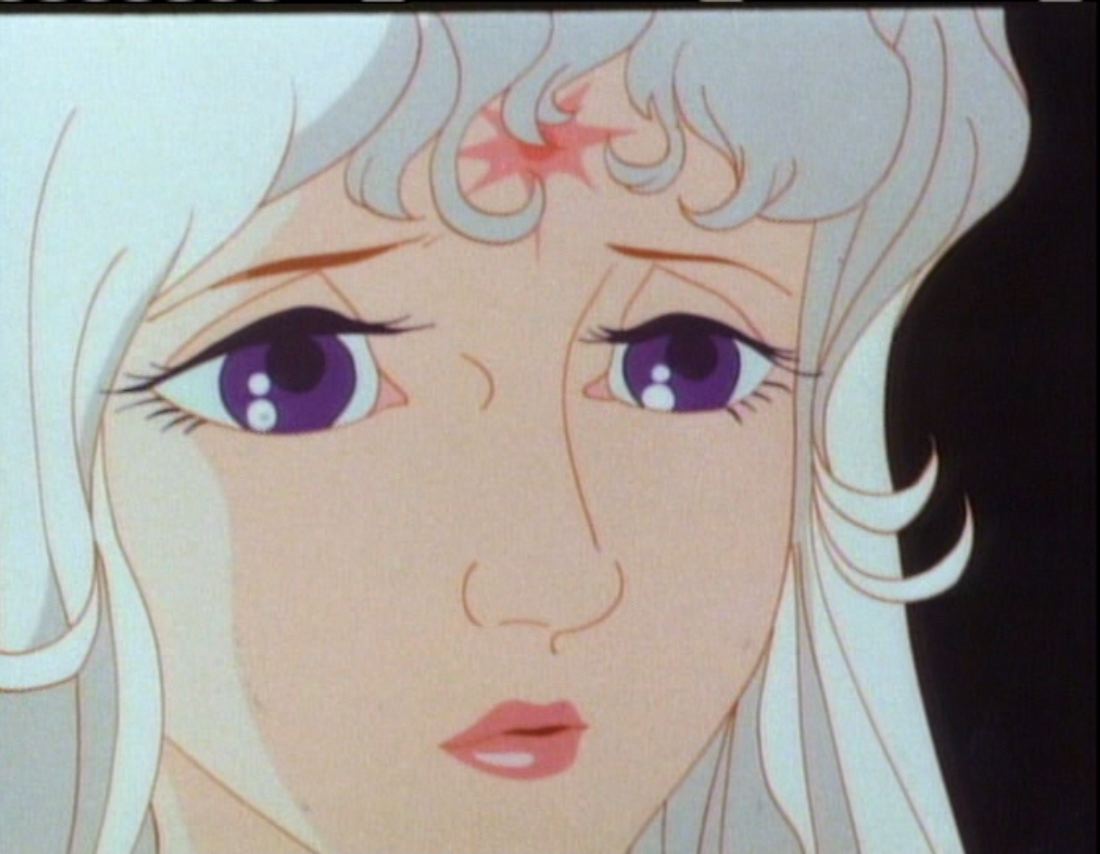
And who are we when we have a big angry forehead zit?  That's right: the Lady Amalthea.

The Last Unicorn is, among other things, a film about how spending time in a woman's body makes you weak and confused and death-prone, but highly lovable.  Unlike the approximately infinite number of other narratives where a strong, independent virgin falls in love and suddenly gets weak ankles (e.g. Rocky, Susan from the Narnia books), Amalthea gets to keep her own body and strength and sense of self, but loses her love.  While I would of course prefer a film where you can have sex without destroying your personality, this one has Christopher Lee, and is therefore recommended.

This hasn't been a good day for Lir.

15 July 2010

On The Perils Of Representation


 I borrowed this PSA poster--yes, let's say borrowed, I am definitely one day going to return to that university and replace that poster--from a bathroom stall at a university, because I think it is a poetic bit of propaganda.  It allows for a fair depth of deconstruction, which I like in an image.  Before reading on, I suggest you familiarize yourself with the ideas of literary and film criticism, particularly the concept of a "reading" of a text.  I don't want to have to delete a bunch of comments going "you're wrong because that's not what the creators meant" like I did when I said Disney's The Little Mermaid was about interracial relationships. 

So: what are our elements?  Black hand, money, white hand, disease.  I say that this will extend to metaphors about black people, white people, commerce, and all varieties of malady.  So: White imperialists come to black nations with the promise of enriching commerce, but instead blight them with poverty and disease.  Or a corruption affects all commerce, poisoning black and white alike.  Or the green bugs are not pathologies, but the "germ" of new life, created by the flow of currency.  Or money is germy.  Or black people are germy.  Note that this last (and maybe the first if we're being picky) is racist.  Indeed, there are several racist readings of the text of this image, even without getting into the positioning with respect to the viewer and who is accepting what and so on. 

Let us consider two hypothetical images like this, one with two black hands, and one with two white hands.  Because race, like most human categories, has a marked and an unmarked (or default) status, only one will appear to the casual observer (particularly a casual observer from a default category) to be dealing directly with race.  This problem is a Known Issue with race.  What are some of the proposed solutions (i.e. ways to avoid being called racist while portraying non-whites in media) and what are the possible drawbacks to each one?

• Always ignore race
Maybe a noble thought, but the problem is that people can't actually do this.  Largely it boils down to ignoring the fact that everyone in your portrayal is white due to the consequences of some unstated assumptions.

• Harp on race constantly
Annoying and exhausting for anti-racists, racists, and people who feel that not much caring puts them more in the former group than the latter.  Leads to films like Crash

 • Be black
Wait, hear me out.  In media contexts, people from marginalized groups tend to be granted more latitude to express opinions only on the matter of their specific group's relation to the mainstream, on the grounds that people from marked categories are likelier to be expert on these subjects than people from default categories.   More comprehensibly, on tv, black people get to talk shit about black and white people and no one except racists or academics or racist academics will really take exception.  Of course, there is a firmly-established political culture dedicated to catering to upset racists, so this is still a bit dicey.  Other possible drawbacks: society won't just let you become black for some bullshit reason.  And, I don't know if this is true, but I heard somewhere that there are disadvantages to being black in America that outweigh the notional pleasure of knowing that you could still potentially be on tv if you use the word "nigger" extensively. 

 • Tokenism/Diversity Checklist casting
Regardless of their level of racial savvy, pretty much everyone can tell if you're doing this.  The impulses that drive this style of character creation (a bid for universal appeal) usually also preclude fully humanizing any characters, and because the desire to have "one of each kind" of cast member need not spring from any actual political awareness, it's easy for it to be accompanied by a bunch of racial stereotypes or for Ma-Ti to not really have any good powers. 

 • Use only white people
Don't...don't actually do this, as a strategy or otherwise.  Besides being patently inhumane, people do eventually notice, and then you either have to justify it (questionable) or change (difficult).   

 • Stop depicting humans
This can backfire pretty easily.  Certain suites of characteristics you might wish to portray with a non-human character, George Lucas, are already associated with poisonous racial stereotypes and whether or not you meant them that way everyone will assume the worst.  Also, people generally need to be involved at some stage, whether in voice, character design, general aesthetic, writing, or premise, and any of these people can have unexamined racial biases or ignorance that make their way into the final product. 

 • Alien casting method
Maybe you know the story, but the scriptwriters for Alien supposedly specified that all the characters were "unisex", and encouraged the casting of actors of whatever gender to play any of them, except Ripley, who was definitely going to be a dude.  While a favored technique of mine, this can only work in situations where race and gender are genuinely interchangeable, and as such is limited in its capacity to tell stories in which these are meaningful dynamics. 

 • God, this is tricky.  What would Solomon do?  

 Oh goddamit it Solomon.

06 July 2010

Ally Sheedy Makes Over Molly Ringwald

Okay, I admit it--besides just trying to put hair in my face, this look is an attempt at Noomi Rapace's dyke-punk style from Män Som Hatar Kvinnor.  Rapace is a dead ringer for Gillian Anderson.  The movie...well.  Suffice to say I have mixed feelings.  It's well-styled and well-constructed, and people seem to think it's feminist in some way.  I guess they mean Rapace's haircut, because otherwise I don't see how it's much more feminist than, say, Taken.

02 July 2010

In Every Color And Flavor Too

While I bear men no particular ill will, I do have a reflexive dislike of movies about them.  That is to say, not films in which a character is subject to a central premise or situation, and because there's no compelling reason for that character to be female, he's been defaulted to male.  I'm talking about films where the lead is presented in the preview as a captivatingly, intoxicatingly normal-man male regular-shmoe guy fellow and the film centers around the delightful and meaningful quirks of his precious character.  Usually he is either recently single or becomes so in the opening scenes, so that what little plot there is can center around him getting some girl.  I've seen a ton of these, of course: it's a major genre.  Another one comes down the pike every six hours or so, and it annoys me the same way the latest "His DAUGHTER...is KIDNAPPED by BAD MANS.  now HE...has to BREAK...ALL the LAWS...and EVERYONE'S FACE...TO GET HER BACK" film does.

Let's see if we can get a list going here.

Young guys:
  • The Graduate
  • Youth In Revolt
  • Adventureland
  • Garden State
  • Superbad (though many Judd Apatow films have this "behold, Man!" quality, constantly remarked on by lazy pundits writing on the theme of What's Wrong With The Youth, they often also have interesting premises)

Middle-aged guys (the largest section! this is the age and gender of hollywood screenwriters! "Write what you know", after all!):
  • Punch Drunk Love
  • Lost In Translation (unusual for spending a great deal of time on the inner life of gorgeous uggo Scarlett Johansson, but compensating for this slight originality by being utterly wretched)
  • Greenburg
  • Funny People
  • Sideways
  • Manhattan
  • Annie Hall
  • Marty
  • American Splendor
  • American Beauty
  • Downfall
  • Stranger Than Fiction (A meta example! In this film, which you are to see if you read this, the mancharacter is a creation (?) of female novelist Emma Thompson, which puts a spin on the whole genre that I think necessitates me rewatching it for a new reading)

Old guys:
  • The Wrestler (Debatable. This one has a premise: the dude used to be a wrestler.  If I include it, shouldn't I include Rocky, and Taxi Driver, and Bad Lieutenant, and The Machinist, and The Pianist, and The Professional, and The Driver, and The Horse Whisperer, &c; &c;)
  • As Good As It Gets
  • About Schmidt

These movies vary wildly in quality, like films in any genre, and my initial suspicion is often easily overcome.  My skepticism is based on an idea I have that films dealing with men's personal crises, their "journeys" to use the term of bullshit art, are widely viewed as more serious and more innately worthy than the same films would be if they had female leads and female-specific crises.

I'm sure such films are kicking around somewhere...let's see...oh, Alice Doesn't Live Here Anymore, that's a good example...Waitress and the whole raft of cute preganancy movies that came up with it, Juno, Knocked Up...Sherrybaby, if anyone's heard of that.  I'm sure a variety of Meryl Streep movies must focus on how she is aging and what that must be like.  And of course romantic comedies often play as "normal lady with issues that mean she can't land a man" films.  And there's Lifetime. 

Come to think of it, I reflexively dislike Manproblem Cinema more when it centers around women.  It just doesn't come up as often.  Man-films, with their seriousness, can attract a lot more talent and money and subtlety at every stage of production, and it shows.  Moreover, for myself the idea of being older, and male, and somewhat more free, is at the very least escapist.  Women's pictures are more like psychological horror.