Showing posts with label bodies. Show all posts

27 October 2013

PLEASE GENDER-SWAP EVERYTHING, BECAUSE YOU DON'T KNOW HOW TERRIBLE YOU ARE YET

THE LAST OF US

The world has been overrun with zombies, as usual, and the only people who survive are rugged individuals and bands of armed mercenaries.  You play as an ordinary tween girl, El, tasked by a boy you love and trust with protecting a headstrong middle-aged man, Joely, who may hold within his delicate body the key to human salvation.  For the first half of the game, you must use your skills to keep him safe, though eventually you trust him enough to give him his own pistol and he assists you during fights.  You grow to bond with your grizzled middle-aged companion through a series of incidents, while stubbornly denying that he is nothing more to you than a surrogate for your own father.  When you are gravely injured, Joely feeds you and brings you medicine, but while he is on his own he is captured and held by the tween leader of a cannibal cult, forcing you to torture and kill the cult members you capture before mounting a raid on their compound to rescue him.  

In an innovative twist, you are briefly allowed to play as Joely (though admittedly only while El is incapacitated by injury).  The writers have gone out of their way to present the men in this game as having their own agency and goals, a laudable change from the passive wriggle-and-squeal tropes of men in video games.  Also refreshingly, no one suggests that the cannibals will abuse Joely sexually (perhaps because of his age), only that they are likely to eat him.  The violence, however, is still quite shocking: especially when you play sidekick, the animations have you stabbing girls many times in the eyes, neck, and groin to disable them.  The context cues of the game ensure that whenever El kills a girl, you know you are killing a human being with personal relationships to her sisters-in-arms, and one of the last human survivors of the apocalypse--all the more distressing because the game frequently requires you to kill all the girls in an area before you can progress.  

The visuals, writing and music in the game are all top-notch, but it suffers from being mired in a survivalist fantasy that has always been about honoring and privileging feminine skills at the expense of masculine ones.  The world of The Last of Us is designed to make technological consumerism, lawn-mowing, and high-shelf-reaching look like ridiculous, obsolete skills; mending, cooking, conflict resolution and child-rearing are the valued skillsets of the post-apocalyptic age.  It gives me pause that so many of our modern fantasies are about this type of world.  It seems to presage a generation of women dreaming about a world where they can be respected for their base animal qualities, without having to worry about male concerns or social pressures.  I shudder to think about the position of men in such a world.  

21 August 2012

Runcible Rape

So, if you're a person, you're probably aware of the latest spasm of insane nonsense in Republicans' ongoing battle against women who have bodies: Todd Akin's assertion that pregnancies resulting from rape were rare enough to be a non-issue in outlawing abortion, because the wombs of women who were victims of "legitimate rape" had a mechanism by which they would "shut that whole thing down."  This fantasy must be a great comfort for anyone who is genuinely troubled by the idea of a woman suffering through an additional humiliating, expensive, life-threatening ordeal after a traumatic assault, yet who must still demand that such a woman be prevented at all costs from accessing safe abortion services.  Akin was at first roundly decried by all sane people everywhere, then right-wingers demanded that we shut up about how terrifying it is that this idiot is allowed to make laws on health care and science and that we ought to only talk about how bad the economy is.  After that, a number of defenders of the sanctity of life until birth emerged from their Morlock caves, and now we have a media "debate" about "legitimate rape" just as we had a "debate" about going to war in Iraq, torture, global warming, et al, ad nauseum.

I am, by nature, an internet feminist, and so in this case I want to discuss issues of language.  When Akin laid his giant head on the sympathetic lap of Mike Huckabee the day after his moronic remarks, he explained that he had misspoken, and that by "legitimate rape" he had of course meant "forcible rape", rather than something that was worth the little ladies getting all het up over.  This term, "forcible rape", has a long history in the anti-abortion fight, most recently when Paul Ryan and Todd Akin forcibly inserted the phrase into a bill which would have denied any federal funding for impoverished women's abortions unless they were victims of rape.  "Rape" not being rapey enough, the co-sponsors made sure the bill read "forcible rape."

Now, "forcible rape" is a bit of a poser, as a phrase something like "close proximity" or "unexpected surprise" or "personal friend."  It modifies a noun by placing before it an adjective which is a central defining characteristic of that noun.  "Rape" means sex which is forced, coerced, produced through threat or violence.  Now, I'm not against differentiating between different circumstances of rape via categorical adjectives, if it helps break the idea of stranger-rape being the typical case, which arguably phrases like "date rape" or "acquaintance rape" do.  But the very use of the words "forcible" and "rape" in conjunction suggests that people who use it believe that there are other species of rape which are important to distinguish from this type.

Indeed, the one which anti-abortion campaigners suggest as an example of non-forcible rape is statutory rape.  Now, I haven't thought much about statutory rape since I stopped wanting to have sex with teenagers, at around age 19, but I think I have a pretty good handle on the right-wing objection to statutory rapes being included in the category of "rape" for the purposes of judging victims' merit.  The idea is that that slutty teens (abetted by the satan-worshipping lesbians at Planned Parenthood) will be so keen to get free abortions that they will (falsely, it is assumed) accuse venerable older men of consensually raping them, so the state had better at least ask the teens to display some vaginal bruising to back up their accounts.  Again, this is a fantasy of female evil created by anti-abortionists to escape from the knowledge that they are hurting children, rape victims, and women in general with their stance against modern fertility control methods.  Statutory rape is not a perfect legal construct, but it codifies the idea that extreme power imbalances, such as those that exist between children and adults, create a coercive atmosphere in which the child's consent is not legally meaningful when compared to the adult's coercion.

Anyway, all this is to suggest that, when you see the phrase "forcible rape" used as though it were a serious concept, you might well want to substitute "runcible rape," because "runcible" is a delightful nonsense word created by Edward Lear, and "forcible rape" IS A NONSENSE TERM CREATED BY POWERFUL SOCIOPATHS.

19 July 2011

Meat Foods I Have Not Missed

A companion piece, for your reference. 

Raw Chicken
I don't care how you cook it, the fact that it was recently a gooey pink gibbet of pathogens freaks me out. 

Raw Beef
How can you not feel like a murderer just looking down the meat aisle?  It looks like what you'd see after you set about yourself with the katana in Left 4 Dead 2. 

Iridescent ham or roast beef
This has got to be a bad sign. 

Hamburger
If you buy it pre-made, it is made from ONE MILLION COWS, as well as all the cows those cows ever had sex with.  Think about it. 

Octopus
The worst possible combination of rubbery and intelligent.  Each tentacle is has as many nerves and moral feelings as a mouse's brain, perhaps. 

Scallops
Pointless, chewy.

Clams, mussels, molluscs generally
I just hate eating something's eliminatory organs. This goes for shrimp and their "sand vein" as well.  

Rattlesnake
Tasted this the last time I was in Colorado in an attempt to be cosmopolitan.  What does it taste like?  No idea.  It was prepared as a falafel, and the snake meat was completely imperceptible.  This experience is characteristic of other exotic meats I've tasted, such as ostrich and venison. 

Salmon
Just never liked it that much.  Best as sashimi, I suppose.

Any kind of white fish
Ditto. 

Puppy
Awfully gamy. 

Bacon-wrapped bananas
Nauseating. 

Veal
Associated with my most serious ever bout of food poisoning, plus it is an adorable baby cow.

Poultry fetuses cooked in the shell (mao dan or balut)
This is as close as you'll see me come to expressing an opinion which is anti-abortion.

04 May 2011

more than a handful

Yesterday was the birthday of Christina Hendricks, which occasion prompted a debate on Slog (and probably other places on the internet) about whether her breasts are real.  Hendricks is currently most famous for her role as Joan Holloway on Mad Men, a show which has been continuously and effusively praised for its artifice.  She also has the dubious privilege of being the go-to centerpiece for any hand-wringing think-pieces about body image in Hollywood, being at once almost impossibly beautiful and constructed at a scale that makes her co-workers look like snappable dolls.  This generally means that discussion of her dimensions will begin in the opening paragraph of the article itself, rather than with the first comment.

It's niggled at me for a while, this question of real breasts.   The term sounds like it ought to apply to people whose tits have been altered in the digital realm, right?  Breasts which are literally imaginary.  But no, someone whose breasts are unreal is a person who's pursued surgical implantation.

Implants are a job requirement for a bunch of female professions, let's admit that up front.  Natural breasts are untidy, usually asymmetrical, and behave like sacs of fatty tissue in motion.  Women generated with reference to some kind of Platonic ideal, as befitting fantasy industry professionals, should have breasts which remain conic as their hosts bounce around and fail to age.  And so women who want to do these jobs are gently but firmly coerced into submitting to horrifying surgery.

As a society, we tend to consider implantation (as well as less aggressive forms of fantasy-conformation, e.g.) to be dishonest, immoral.  So you have vehement fights in which one party feels they are defending the honor of a beloved figure by claiming that she would never be so awful as to physically change her body for acting, while the other party believes they're performing a public service by revealing a base fraud.


The problem is that our judgement of a real person who works in the dream factory implicitly compares her to the fantasy creations she's helped present, and the real woman--however plastic she may be--is inevitably found wanting.

08 September 2010

On the 'ormones

I don't think I should be president.  My reasons for this are various, with the most important being my W-esque disregard for the work and knowledge that should go into holding down that particular job, but the one I expect to receive the most opprobrium for is that I believe I am hormonally unsuited.  For two days a month, I vacillate between full-body depression and self-righteous belligerence.  It's not that I have no moods at other times, but this pattern is undeniable, reproducible.  I could set my watch by it if my watch had a 27-day round.

Now, I take this feature of my corporeal existence into account in my life, such as determining if I am "really sad" or "really angry" by doing some quick sums on my fingers.  Moreover, I don't make a big stink if my partner does likewise, just as I don't decry him for using the word "cunt" to describe a maleficent person.  I consider these reasonable actions, and he grants me a like leniency to inquire solicitously as to whether his organ has strangled the flow of blood oxygen to his brain, or to describe a fatuous person as a total glans. 

But I suffer some guilt for not finding it inappropriate to allow others to consider my hormonal equilibrium, in case my own actions in my personal relationships cause all women everywhere to be perceived as unserious.  I don't even want to suggest the appearance of appearing to suggest that other women experience these symptoms, in case I seem to be saying women are basket cases. 

This is a style of guilt that my political sympathies have prepared me exquisitely for: combining "the personal is political" with the categorical imperative is a good way to have a lot of people regard you as a bit of a downer.  But let me tell you, the very second I hit menopause and get a real work ethic, I'm gonna put on some pearls, strip down to my sports bra because suddenly it's just really warm all the time, and run for president of whatever country I am currently in, or think I could feasibly run.  I don't care what one, really.  Namibia, Haiti, America, whatever.

02 September 2010

Mannequins with Kill Appeal

"It only got a 30?!  You're shitting me."
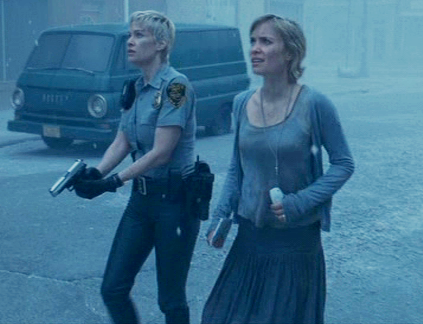
There's nothing for it: I've got to stump for the redemption of the film version of Silent Hill.  This is a movie, and I can't stress enough how unusual this is for me, where I had put it on in the background while I gazed into the internet but then found myself more and more drawn to the film and actually put the internet to one side altogether so I could watch it closely.  After it finished, I returned online again to look up the reviews, which I vaguely recalled being bad.  I was wrong: the reviews of this movie eviscerated it.  They are literally worse than Gothika.

I don't know if it had been a disappointing summer and all the critics were hot and angry or what, but there are far more deserving targets that received an indulgent pass while Silent Hill was getting its neck stomped.  I daresay there was an aspect of revenge in it: TriStar refused advance screenings, to mitigate an expected poor response, and critics clearly jumped at the chance to punish this behavior.  Horror is not the genre to work in if you're hung up on critical acclaim in any case, but when 28 Weeks Later, Shadow of the Vampire, and THX 1138 get scores in the 70s on Metacritic while Ravenous, Final Destination, and Saw have scores in the 40s, some metric other than quality of filmmaking is clearly being drawn on to evaluate them. 

I must say, first, that I have never played through a Silent Hill game, because they are scary and I get scared.  I can't, therefore, relate to some people's experience of the film as a betrayal of the franchise, comparing it against the film that should be there.  I have the luxury of only being able to evaluate what is there.

I NEED AN ADULT
I don't mean to argue that Silent Hill is a very good film, heavens no.  I'm quite comfortable losing that argument.  It just has much to recommend it and is, though this is faint praise indeed, a standout among video game adaptations.  The critical perspective I draw on which rewards me richly when I watch Silent Hill is a feminist critique, something that's still fairly thin on the ground in movie review circles.  It's very much a women's picture, if such a thing still exists: all of the characters save those inserted at the behest of execs are women; the horror is that classically feminist style, body horror; it doesn't use women's suffering primarily to titillate a presumed male gazer, as Gothika does; and, as in Aliens, it's not so much big dumb guns as motherhood that saves the day.  As far as I'm aware, no marketing to a specifically female demo was attempted: the trailers just about reproduce Sean Bean's role in full, the way the marketing for Scream was cut to suggest that Drew Barrymore survived the credits. 

The storyline is a regular ghost one, revenge/justice for a female victim of patriarchal violence and social ostracism, here with heavyhanded religious overtones that do little besides absolve the viewer of responsibility for the mistreatment of women unless they're a member of a Christosatanic cult.  The town and its horrors are explicitly manifestations of the psyche of this ur-victim.  Frankly, I'd rather have it that way than how supernatural elements are manifest in most horror films, where characters devised specifically to treat a protagonist's experiences of non-materialistic phenomena with skepticism are then punished for their disbelief with grisly death.  Here the grisly death is distributed much more impartially, which is always refreshing. 

The main thing going for Silent Hill outside of its feminism is its atmosphere.  All the exteriors are dampened in a gray-white mist where black ash falls from the sky like snow, and all the interiors have the perfect quality of urbex in a dying steeltown.  The town itself is based on the story of Centralia, Pennsylvania, but I can't help but think Roger Avery missed a trick (one of, you know, many) not writing it as a more explicit portal to hell.  The monsters have been designed from the principle of the uncanny valley, and I can't think of an instance where it's been used more pitch-perfectly, except maybe Gore Verbinksi's version of The Ring, another female-focused atmospheric horror. 

Generally the film is about mothers and daughters, which may explain the low level of sexualization experienced by the cherubic Radha Mitchell as main/final girl Rose.  Her companion for most of the film, Laurie Holden's Officer Cybil, has a cop-appropriate blatant lesbian image.  She's sexualized, but as a sleek muscular object along the lines of Robert Patrick halfway through unmelting himself in T2.  The rest of the film's sex is tied up in Pyramid Head, here a straightforward avatar of rape, and the mannequinesque nurses, whose forest of bared cleavage Rose has to cautiously pick her way through lest she be torn to ribbons.

"I would have liked more time with the cleavage nurses
and less with the religious fanatics."
Now, I think Tycho's a hundred percent correct when he says that the style of the film evokes the style of video games.  I've seen just about all the video game movies, and I've played a fair amount of survival horror, and I've seen a fuckton of cutscenes.  And the quality of cutscenes is this: they contain a lot of bad, clunky exposition, and they contain a lot of visual spectacle.  Their function is to provide a break in the action which briefly suspends the player's control in the interest of advancing the plot.  Silent Hill retains the cutsceneness closely enough that I kept feeling like I ought to be pressing X.

I don't put much stock in the idea of faithfulness as a measure of the quality of an adaptation--who wants to hear a cover of a song identical to the original, anyway?--but I have love for films that have love for their source.  Christopher Gans spent years trying to obtain the rights to Silent Hill, going so far as to create his own fan-film scored with the Silent Hill soundtrack and send it to the game's creators.  Aided by this purity of feeling, he's produced something that expresses the spirit of, if not the games themselves (for how can I judge that), the medium and the genre they spring from.  The whole idea of survival horror is that you are resource-poor and nearly powerless in a landscape designed to do you harm, and from themes to sets to characters, the movie carries this idea through wonderfully. 

I can't say I don't feel a little hurt that Silent Hill was panned so especially badly, because the symbolic language it used was so close to my own experience of feminine terror, and so keenly expressed.  When I read through mainstream reviews, I can see that none of that has come through for most reviewers, and as usual with an adaptation (especially from a devalued medium), a number of them have felt free to just make shit up to pretend familiarity with the source, like when Roger Ebert wrote that the brilliant colors of From Hell closely evoked the graphic novel.*  Fans of the game are also very angry at the ways in which it differed from the movie that happened in their minds, but that kind of bitching has been easier to write off since Watchmen.  When I look at amateur reviews, such as this one from the Bechdel Test site, though, I get the feeling that I'm not the only one who sees the value in it. 

"30, though!  What the fuck."
*Maybe I am conflating him with a different critic, but I swear that someone said this, and Ebert is a critic I have no real issue with slandering in a post that touches on gaming. 

29 August 2010

Proportional Response

Annoyed!  Annoyed by something on the internet.  In this case, a formula for determining the ideal length of skirts.  The idea is, your upper and lower leg are of different lengths, right, but they ought to be of equal length, so we can correct the natural flaws of the body using a skirt length that creates the appearance of an evenly balanced upper and lower leg.  So that part is already objectionable, as it cheerfully acknowledges an impossible ideal while encouraging women to bend themselves towards it.  That's just regular, though.  That's everywhere.

No, what's really annoyed me is the math.  The formula for determining your ideal skirt length--which is to say the length that visibly bisects the lower half of your body, creating two visibly equal sections, is as follows:
( length of longer leg section - length of shorter leg section ) / 2.  That's your magic number.  If your upper leg is longer, you go that far above your knee in whatever units you measured, while if your lower leg is longer, you go down from that point.  It's so simple!  What simpler way could there be of determining half of something!

Anyway, my curiosity got the better of me and I mocked up some straight skirt lengths from this paper doll I made of myself a few years ago.  It's all from the high hip, and at some point when it's not after 1 AM I should really do the same with A-lines and high waists.  edit: have done this, below


10", 17", and 33" have all been recommended for me as lengths, while 12", 25", and 29" have been direly warned against as leg-thickening.  Presumably each number would shift depending on the apparent length of my leg (skin-colored shoes being quite in style) and height of my heel--I've noticed that wearing heels with flares makes my lower legs look freakishly elongated, for example.  I think I'll be sticking to the rubric of "buying things I like to look at and wear."

18 August 2010

I got arms that long to hold you

Where I'm going I'm pretty sure I'll still need eyes to see, but--sadly? I don't know--I doubt I'll need a lot of the other body parts I collected over the years. A number of the more portable ones are already packed away, but those pictured here must remain in my room or, in the case of the torso, be stealthily abandoned in a distant public area after dark.

I decorated these when I was younger and worse and had fewer
Sharpies, so, you know, sorry you had to look at them.
Glass head appears courtesy of Pier 1.
Barbie leg at left for scale.
A keychain and...not sure why that has a safety pin. Punk rock!
Some human hair.
My closet.

Okay, so why do I have these? I'm more into skulls these days, but I think it had to do with wanting to seem dangerous, yet clever and sexy, like a serial killer. I never felt like other people regarded middle-class pacifists as sufficiently dangerous for my taste. But I also surmise that my motivations had something to do with the suggestion in Killing Us Softly that women are often depicted as disembodied parts rather than full people.

I saw Killing Us Softly 3: Son of Softly once in a college sociology class, and once in a college feminism class, and once before that in a context I don't remember.  It begins with Jean Kilbourne relating how she, a simple young woman working in the advertising department of a medical journal, happened to invent the idea of "taking ads seriously" in the 1970s when she started pinning sexist ads up on a big board in her home and then asking her friends to assist her in rendering a critical reading.  I can't really fault her for promoting a DIY approach to forming a personal philosophy, but I can't help but be irritated by anyone advancing the intuitive, anecdotal I-just-know approach to scholarship that is her stock and trade.  Anyway, she goes on to claim that violence against women is "widespread and increasing", which would have been quite a bold thing to say in 1999 since it would have so drastically contradicted so many reports and studies discussing the dropping crime rates at the time.  I imagine it's just a consequence of not updating your slideshow that often. 

Kilbourne argues, over clips of leggy women voguing as cameras follow them at a low angle, that "over and over again, just one part of the body is used to sell products, which is of course the most dehumanizing thing you can do to someone. Not only is she a thing, but just one part of that thing is focused on." Leaving aside a whole bunch of begging the question there, to what extent is this true, and to what extent does it matter? I guess after giving the whole thing around ten years' thought, I'll go with a) to some degree and b) somewhat. Close-up framing is basically an inevitability in image creation since, oh, ever, but at the very least since Birth of a Nation. And the way advertising works--the constant, increasingly sophisticated attempts to create, shape, and respond to consumer demands while always showing them something memorable--any part of the body that's fair game to show is going to be continually refigured and repurposed to make it new. That would probably be well and good if making a display of the perfected aspects of women's bodies weren't of such special interest to this society at the same historical moment when we seem to have reached the maximum tolerable level of equality and autonomy for the distaff and have started trying to shout back the tide.

But to what extent does this sort of compartmentalization and objectification affect women's self-conception, thereby insidiously undermining efforts at equality? When asking a question like this--essentially "is this a cultural construction or are women just like that?"--it's useful to be able to look to men. Sure enough, men are reported to experience great distress when the value of their bodies is abstracted to the dimensions of a single appendage. That level of distress, however, doesn't seem to have greatly affected their overall performance as a gender. It really seems to have more to do with, you know, choice and opportunity and all that, than whether they're humiliated in advertisements.  Because boy, are they ever.

The control of images and words is overly weighted as a tool for equality, I think, because words and pictures are fun to blether about. Controlling them seems quite easy compared to enacting policies to lessen the gulf between rich and poor, which would probably do the most good for everyone involved. But it isn't easy. Words and pictures are always going to break out of restrictions, because that's just the way people do. And I daresay, if political energy is indeed a finite resource (who knows, right? But I bet I wouldn't be so interested in the study of images if it weren't for Kilbourne) that it could be better spent studying to organize than studying to adbust. I understand, however, that my opinion may lose some of its authority when you see that I bought human hair.

Lain will be accompanying me to grad school if I can just
figure out a way to remove her head.

08 August 2010

On Being Feminine

Axiom: "One must suffer for beauty."
Corollary: "Whatever is most painful is most beautiful."

Sometimes I do really stupid shit.  In this case, I bought an epilator.

An epilator is one of those devices that people from the future will look back on yellowed period ads for and go "I can't believe they really invented a device made of dozens of rotating tweezers working at great speed to pluck the hairs from people's bodies, and the credulous fools actually bought it!"

I knew--I knew--that I had a historically low tolerance for having my hair torn out by the root.  But reading enough recommendations (while ignoring the ones that said "I wax a lot but this hurt like buggery") and imagining leg hair with softly-tapered, pigmentless tips instead of a harshly-cut end swayed me.

 Hair follicles are amazing little things, tiny organs fed by individual capillaries.  The root of each is filled with dormant stem cells which the body uses to repair itself after an injury.  For this reason they are notoriously hard to destroy, and attempting their destruction is inadvisable even if you would like to be sort of like an egg or a statue.    
 
My main concern was that I would bleed too much.  Generally, I am like the proverbial stone, but I have drawn blood with a home waxing kit before.  My painkiller of choice, ibuprofen, is a noted blood-thinner, so I went to the store that morning and picked up some acetaminophen.  Here's something you may not know about acetaminophen: historically, I have never experienced a reduction in pain after taking acetaminophen. This time was apparently no different.

After a while I got into a rhythm: epilate for ten to fifteen seconds on each leg, wait ten minutes for the pain to subside, and return like a dog to its vomit.  It did get better after a while, both because I had less hair to pull out and because I started getting more able to leave my body during the plucking.  Oh, and I guess I had a beer as well.  

The next night I went back and did it again.  This time, running it over areas whose hairs had been plucked or broken off already, it was bearable.  The sensation of having one or two hairs pulled at once was even sort of meditative.  Running it over areas with more than two or three hairs continued to be excruciating.  But I've kept at it, just tearing out a few hairs each night, like a religious fanatic in a terrible novel about some secret Jesus societies. 

Neither tremendous, crippling pain nor the foreknowledge that I'm potentially endangering my future healing ability are able to prevent me doing something that will make me look, like, 4% better to the only person who ever sees my legs,* my partner, who, as you may recall, already loves me anyway and requires no convincing of my ardour through self-mortification.  I have some kind of brain illness. 

* I guess in retrospect the internet also sees my legs.  That's disturbing to me.  I should really give this more thought.

31 July 2010

Almost Rosey

I'm honestly a bit self-conscious about this next thing, but I regard this blog as somewhere between confessional and exorcism, and so it must come out.  My embarrassment stems from how this hits a bunch of anti-feminist stereotypes of women: it was a frivolous expense, on a foolish superstition, for looking pretty.

Okay, so, here goes: I've had my colors done.  It was a birthday present, anyway!  I just agreed to sit through it!


If you're not familiar with this, it's when you pay someone to look at you and tell you what colors would look good on you, often with regard to your "undertones" or "season" (I'm an Academic Autumn).  The practice is rife with stories of people going to several different practitioners and getting entirely different sets of colors, so you'll excuse me if I don't consider it binding.


I feel that I understand colors pretty well, having often drawn circles on white paper with colored pencils and having observed the apparent change in the centres.  I'm aware of your analogous and complementary schemes, so I see pretty much what is happening here.  The first four swatches are meant to be I guess interpretations (for makeup-buying) of my skin color, blush tones, eye colors, and hair. 


This was back when I was not dyeing my hair, on purpose.  The color-picking woman exhorted me to come back if I ever changed my hair, since of course this would shift around the wheel in a way that only an expert could be reasonably expected to compensate for.
(An aside here: After talking for about five minutes over dinner last night about the physical structure of hair and how that affects the way it can be colored, one of my father's co-workers confronted me in a weirdly hostile, contemptuous way about whether "you even remember the actual color of your hair," as though dyeing would make you unfamiliar with that, and further as though not changing your hair would be more moral than having knowledge about the molecular composition and organization of keratinous structures.) 

 Here's my prescribed, non-embodied colors, separated  by hue.  As you can see I am meant to wear almost exclusively green.  I do wear green without remorse, but colors I generally wear happily not represented on this chart include blue, black, gray, brick, navy, gridelin, yellow, and taupe. Yes, even yellow, which if you mention to someone they'll go "Oh, yellow is a hard color to wear."  No it isn't.  You just put it on your body like all the other colors.   It doesn't try to escape or explode or nothing.

A selection of colors from the chart.  Body colors are situated at the confluence of a circle and a line.
The color-woman said I have the eye-whites to wear proper white, but that I should look into getting my teeth whitened.  Instead I have used them for chewing food, removing tags from clothing, and looking that little bit crazy.

23 July 2010

On Hedonism

My favorite thing about Jennifer's Body--in which Karyn Kusama and Diablo Cody attempt to remake Mean Girls as Buffy the Vampire Slayer and end up with an affected, irritating Ginger Snaps--is the opening scene in which Megan Fox scratches a scab and chews on her hair.  Fox is, in the film as in life, an exqusitely crafted product machine-tooled to the sexual specifications of an aggregated audience of women-fanciers, and despite my knowledge of this, I can't help but enjoy seeing her walk around and even occasionally talk in films where she has not been tinted orange in post-production.  There's something going on with Jennifer's sexual power and demonic energy and physical perfection all waxing and waning together month by month, but I'll be damned if I can tease it out of the web of pointless homoeroticism and immediately dated cultural references.  Anyway, some part of the film's point, whatever that may be, is about the physicality of bodies, and the relative frailty and impermanence of even the most perfect ones.  Moon, too. 

I think I love my body just about as much as is humanly possible for a young woman of this era who doesn't exercise (hence my project of extensively documenting it), but I still get Kafka-esque heebie jeebies from many of the realities of being a consciousness in a big gestalt of semi-autonomous cells, not all of whom share my genetic material.  Sometimes my teeth just hurt for no reason, and I'm always biting the inside of my mouth.  My toenails--are they getting ingrown?  Was there always this much hair?  Does my nose look bigger when I wake up than it did when I went to bed?  Is sitting causing my ass to atrophy?  Why is all this body fat distributed as cellulite instead of smooth curvilinear forms, anyway?  Must my breasts be asymmetrical?  What happened to all the coins and paper and hair and peach pits I ate?  And my skin!  What the fuck!  I'm not even going to go into what goes on in my perineal area, suffice to say that popcorn is a sometimes food.  And as if that wasn't enough to worry about, I'm freaking mortal as well!

Keeping this in mind, it is often difficult not to eat all the cheese I want.

16 July 2010

Now that I'm a woman people keep trying to impregnate me with Satan's baby

Wearing sunscreen causes me to break out.


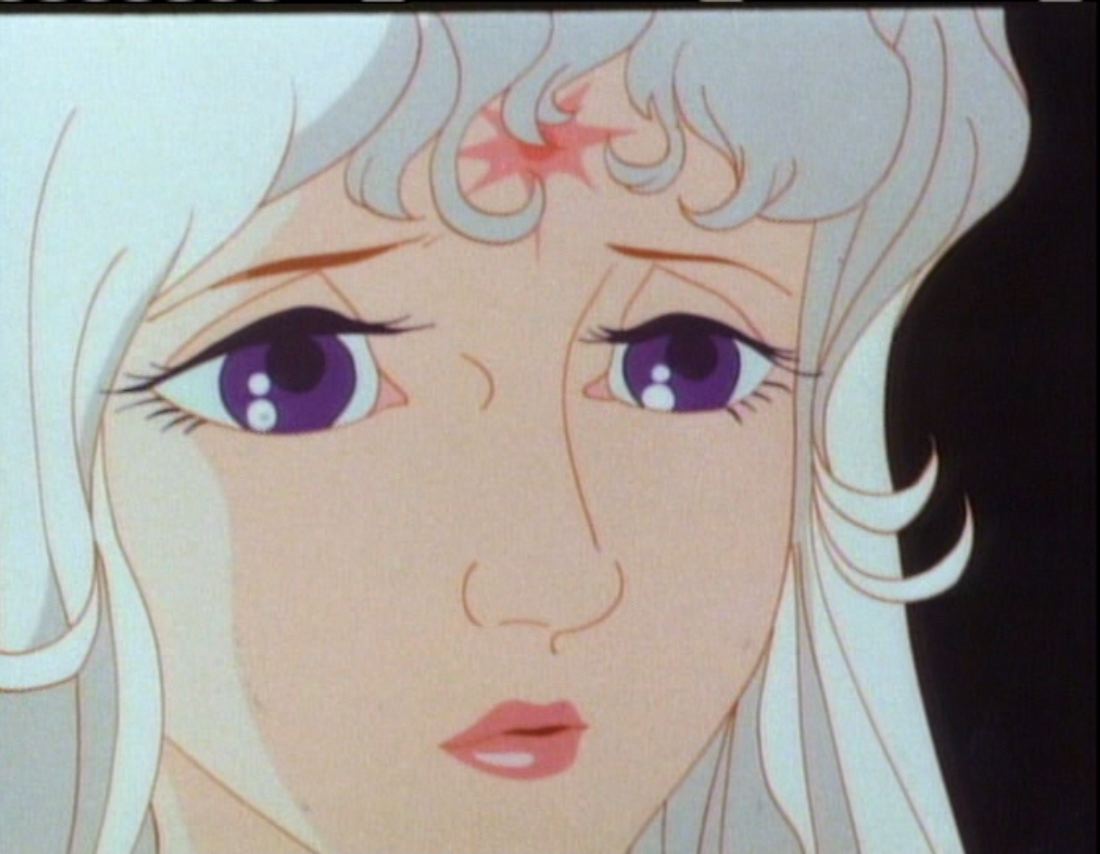
And who are we when we have a big angry forehead zit?  That's right: the Lady Amalthea.

The Last Unicorn is, among other things, a film about how spending time in a woman's body makes you weak and confused and death-prone, but highly lovable.  Unlike the approximately infinite number of other narratives where a strong, independent virgin falls in love and suddenly gets weak ankles (e.g. Rocky, Susan from the Narnia books), Amalthea gets to keep her own body and strength and sense of self, but loses her love.  While I would of course prefer a film where you can have sex without destroying your personality, this one has Christopher Lee, and is therefore recommended.

This hasn't been a good day for Lir.

30 June 2010

I AM POD, THE GREAT AND TERRIBLE

Being, I guess, somewhat dumb, I'm a big watcher of BBC3, though not if there's anything on BBC4.  So it was that, around 2 AM, I would come across Snog Marry Avoid, a makeover show whose title is loosely based on the playground/road trip exercise Fuck Marry Kill.  The premise of the show, as introduced by former Atomic Kitten and increasingly tan person Jenny Frost, is that British women are over-fond of makeup and under-fond of clothing, and with the help of a sassy computer -- bear with me here -- she will reintroduce them to their "natural beauty."  The phrase "natural beauty" is constantly repeated on the show, but poorly defined.  Removing a quarter-inch thick layer of tarry foundation is arguably moving towards natural, but putting a thinner layer on afterward is contradictory; "natural" seems to be synonymous with "brunette" regardless of the color of hair growing from someone's head; and many of these (mostly very young) women come to the show already in a state of unusual naturalness with regards to dress. 

The course of each makeover runs just so: A test subject / victim / contestant / FUTURE TV STAR is introduced with a 360° turn-around of her body in the clothes and makeup she selected to go on the show, angled from about knee-high.  I don't think I've seen a subject not wearing nosebleed-inducing platform stilettos.  There follows a montage showing her ludicrous fashion sense, intercut with shots of her drinking and dancing at clubs and the hours-long process of applying fake tan, false eyelashes, and hair extensions.  Hours-long processes not stressed as contemptible include hair removal, skincare, salon visits, and plastic surgery--at least half of the subjects have breast implants.  I would applaud the show for its lack of commitment to "natural beauty" when that would mean re-cutting up young women to prise out their silicone, if shows like The Swan and Extreme Makeover hadn't made the decision about whether to slice up women seem more like a matter of production costs than morality. 

After the introduction, the subject meets Jenny Frost, who displays her blinding teeth in an attempt to appear friendly.  Frost makes some neutral-to-positive comments about the subject's appearance, before asking if she is "ready to meet POD."  The subject assents, and the scene cuts to her walking into a darkened room.  With a click, a brilliant light floods the stage, lighting the entire background Frost-tooth white.  The subject looks disoriented as her pupils contract, and a sarcastically posh female voice addresses her.  "I AM POD.  WHO ARE YOU?"  The only reason to watch the show is the conceit that this voice comes from a 70s-sized sentient supercomputer whose primary directive is the promotion of "natural beauty" and whose secondary purpose is to self-righteously slag off these subjects without the distraction of possessing her / its own critiqueable body or style.  Gok Wan, take note!  Deny your humanity and embrace metal gender

There's two real flavors of subject on the show: women who have bought into every media-disseminated notion of what makes a woman sexually attractive to men to an outlandish degree (my temptation is to, for the sake of brevity, refer to members of this category as "whores", but this seems like a poor idea for several reasons, the most pertinent being that it strikes me as dismissive of the stylistic choices of actual sex workers); and people who I don't think will be particularly offended if I call them freaks.  Both styles of subject play their role on the show like an audition tape, either flirting and pouting at the computer or acting contemptuously too-cool for its machinations to work on them (respectively, obv.). 

POD is openly hostile and confrontational to subjects about their style of dress and makeup, using an incredulous, personally-affronted tone to berate them about their "fakery".  The show gets away with a great deal here due to its non-human host, including directly asking women if their breasts are "real" (a digression here about this question and its expected response probably deserves to be expanded into its own entry), calling them dirty, stupid, and low-class, and generally treating as stomach-churning the idea that they are making an overt public display of their sexual availability.  And that's before the hard-sell tactics start. 

Everyone is put on the back foot when a computer starts yelling at them, but the freaks tend to be slightly better versed in defending their stylistic choices than the cartoon sexpots.  I always watch in the hope that someone will offer a critique of the idea of "natural beauty", and some do, but I find them all to be pretty inarticulate about it, and to deliver their responses with the arrogance of a snotty teenager who believes she is the first one to have figured out that it's all phony, maaan.  Mostly it comes off as dull people who don't have writers spluttering vainly to come up with a way to own an opponent who has no momma.  Nonetheless, most are deeply protective of their styles. 

The theme of adding a garnish of scientific gravitas to the proceedings continues here with a survey of an undisclosed number of "members of the public"-- a public which appears to consist entirely of moderately attractive men ages 20-35, often the same six or seven men whom I expect are interns on the show -- about whether, seeing a picture of "this girl", they would choose to Snog, Marry, or Avoid her.  Typically there is also a secondary survey asking whether they think she looks like a) a sophisticated lady b) a punny joke answer or c) a filthy whore.  The subject is asked to pick what she thinks the men selected in each case, by pressing a touchscreen button which is also the inside of your television screen.  She views a selection of these men opining about her looks to a camera; they refer to her in the third person and are apparently not privy to her responses.  We the viewer, however, are privy to every emotion that flickers across her face during this time, as the show does not cut away but instead displays the men speaking in a picture-in-picture box. 

The percentages of "avoid" and "filthy whore" responses are obviously higher than the subject would like (that is the premise of the show), and it is at this low point in her estimation of herself that POD asks if she is ready to experience a jocularly and typically also insultingly named "make-under" (e.g. "spunky junkie to middle-class lass").  The subject assents and with a small fanfare is instantly transformed by means of a photocopier-style horizontal bar scanning down her body, replacing the old clothes, hair, and makeup with the new.  I don't have much to say about the content of the makeovers except that they tend to feature minidresses worn with black tights, and that all of the subjects are still wearing stripper platforms with stiletto heels, though occasionally not the ones they hobbled in on.  Another 360° turn-around, and then POD asks the subject if she is pleased.  Subjects express surprise and admiration in a manner that, if I were POD, I would instantly dismiss as utter fakery.  The eponymous survey is re-administered, men say they like the looks of this one, and "avoid" responses decrease to zero.

All the subjects possess a familiar air of arrogant desperation: the attitude of those whose foremost ambition is to be on television, and who to that end have worked and strained and struggled every day of their lives to cultivate a talent for applying to be on reality television shows.  In a highly valid survey I conducted with actual members of the public, 100% of them find viewing youths who cop this attitude to bias them towards thinking that these obvious fame-hounds deserve every bit of the humiliation they volunteer for, as well as making me, I mean them, more likely to cut the show slack for treating its contestants with cruelty.  In the interest of creating sympathy for other human beings even when they are televised, I suggest the overzealous medicalization of an ambition for fame, and the treatment of this dubious pathology with the oversubscribed addiction model. 

The subject bids POD goodbye and turns off the light before walking out and reappearing on the street, where they are met by friends, a partner, or their mother, who usually express a more sincere degree of shock and delight at the new look.  Partners, for probably obvious reasons, tend to be the least expressive of any pleasure they may experience, noting that the subject "looks good whatever you wear", but also averring that they hope she will now spend less time on her makeup.  Often a follow-up interview is conduced by Jenny Frost one month later, where she comes upon the subject during the day in a coffee shop and draws conclusions about whether the televised makeover has made a long-term difference to her clubwear.  There is a high relapse rate, probably because unlike some makeover shows, this one does not take the step of destroying the remainder of the subject's wardrobe. 

The show can knock out three of these sequences in 30 minutes, usually pairing two sexpots with one freak.  It's also puffed up with some interstitial segments in which Jenny Frost tests out DIY beauty aids.  In one frankly gobsmacking scene, Frost uses some old pressed-powder bronzer and lotion to concoct a fake tan solution, then puts her finger to her lips and says "Shh!  Don't tell POD!"  I suppose the show's overall message is something along the lines of "don't overdo it, just be genuine", but that is hard to take from a programme with a magic computer for a host. 

Snog Marry Avoid is one of that new breed of cultural products that are crafted to work on numerous levels: as serious advice for women whose beautification routines have become overwhelming; as a freakshow; as a cynical and frankly sinister co-opting of feminist messages to love the body you have; as dystopic post-industrial sci-fi; and as a parade of slim, barely dressed young women in high heels who get justly punished before they are rewarded for wanting to be good girls.  It's sickly fascinating to me for all these reasons, but after watching a dozen or so youngsters be highly defensive of their off-the-rack streetwalker costumes, I think there's an appeal of this fashion that the steamroller approach to making them "natural beauties" ignores entirely. 

There's a lot of reasons for a young person to feel frightened, anxious, and conflicted about their sexuality today, and slipping into a pre-made persona with preset responses from the alternate sex can provide some feelings of security, of being protected by your mask.  More than that, though, if you make yourself into a panto character, and someone slags you off, it becomes easier to dissociate your private, personal self from their put-downs.  It's not you they're insulting; they don't even know you.  Honestly, how could they?

15 June 2010

Look At This Fucking Haul

These are my men's jeans. I bought them in a department store which doesn't need or deserve the publicity. This store is bi-level, with the men's, children's, and housewares sections on the lower floor, and the women's department on the upper floor. In order to avoid using the men's dressing rooms and potentially seeing a penis, I grabbed a few sizes I thought might fit and ascended the escalators to the section of my gender.

A familiar frisson accompanied this action, the same as I felt after using the men's room at the theatre once. (It was an emergency more than a whim: my film was in progress but another well-attended movie had just let out. Both men's and women's restrooms were packed to the gills, but constant maddening experience has demonstrated to me that the men's line moves faster due to anatomy and a desire not to be thought gay. I waited, staring firmly ahead, in a line of men and children, suspecting that each saw me and resented my ability to invade their space without consequence. It smelled terrible.) After assuring a reasonable fit in the ladies' dressing room (though, like all jeans, these gapped at the back), I brought my purchase to a pretty young clerk. As she rang me up with a retail smile, I envisioned her being blown away by my poker-faced daring, and later telling her friends of her envy and admiration for my style. (I probably shouldn't admit this, as it appears conceited beyond belief; in my defense, I am aware it is a fantasy. This is not what I believe actually occurred.)

I rarely buy men's clothes since I went femme, so this purchase was tinged with nostalgia for teenage dykehood. The feelings of danger in crossing a gender line, I find, vary considerably with the circumstances. The two-level design of the store here forced me to cross the border very publicly, but many stores separate men's and women's sections by inches. I've never been accosted, asked to leave, or treated with hostility while browsing for men's clothes, but I suspect the same would not be true if I were male-appearing and looking at skirts. I feel it can be advantageous to roleplay that, perhaps, you are shopping for a gift for a father, brother, or boyfriend. Or just adopt the same demeanor you'd cop if you wanted to shoplift: you belong and your actions are normal and blameless.

I think women should have the experience of shopping for and wearing men's clothing, not because it is transgressive, but because I think women should understand firsthand what it is like to wear something which has been designed primarily to fit and be comfortable on a broad range of bodies. How it looks is something of a tertiary concern for men's clothing, following well after function and comfort. By the same token, I think men should experience buying and wearing women's clothing, due to my deep-seated hatred of men.


These are my jeggings. Jeggings are a recent point of contention in the fashion police state due to their availability to people who have enough body fat to continue menstruating. They combine two previous fashion trends that were giving people the vapors: skinny jeans and leggings. Numerous rules have sprouted up to mediate the wearing of jeggings. We are instructed that to properly wear jeggings, we must avoid being old, "curvy", thick in the thighs, or habitual wearers of panties.

Basically, the rule is that flaws--those aspects of your body that differ from a purely hypothetical and subjective female ideal--must be concealed for the sake of public decency.  Remember, if you're female, the visible parts of your body belong to a sort of civic trust, and as such are subject to continuous urban renewal and beautification efforts.  The process of disguising the unacceptable reality of your horrible body in a decorative way is known as "flattering", from a term meaning an insincere compliment delivered with an ulterior motive.

Skinny jeans, leggings, and jeggings are unflattering because they fail to conceal the shape of the leg, belly, and buttocks (the most awful parts of the woman, after her terrible genitals), forcing people to view the shape of female bodies which are wider or differently proportioned to the ideal. I plan to wear them with boots. Incidentally, the price of jean-colored spandex sewn into the shape of some leggings is slightly greater than the price of men's jeans. Both are about $15 cheaper than inexpensive women's jeans.

So as you can see, I'm a fashion fucking rebel. But already, inadvertently, I negated any transgressiveness of either of these articles of clothing when I bought them in a chain store, with money, and then took them home and put them on my young white pretty body.  Whether I or anyone else wants it that way, that'll always be a fashion "do".

14 June 2010

Oh good, another blog

Reading lipstickeater and threadbared on consumerism and femininity (recently synonymous) has got me thinking about the development of my own gender expression.

As a child I was never able to put conformity before comfort--when my long rusty hair got painfully tangled at the base of my skull, I cut it off.* Dresses were too scratchy, and besides, my feminist, atheist folks didn't want to burden me with unnecessary gender coding. It was purple or teal slacks and Calvin-style striped shirts all the way.

Then before I was really prepared for it, puberty arrived and my comfort eating began to pack on the pounds. My jeans size went up--8, 10, 12 for a long time, then relaxed fit 12, finally 14--and I bought a ton of men's XL t-shirts with superhero logos.

Through some cultural osmosis or other, I came to the conclusion that girls who cared about the way they dressed and wore their hair were stupid, and since my greatest fear was of looking stupid, I'd stick completely to jeans, jean shorts, and a single, floor-length denim skirt. I'd play with lipstick and blush when no one could see, but without access to women's magazines (soooo stupid) I had no idea how to proceed. So.

Around about the end of middle school, I began also wanting my clothes to express a burgeoning queer identity, albeit not one my parents would be able to decipher. Overlarge Doc Martens with rainbow laces--who could possibly ferret out my genius code? I would ask for my hair as short as the Great Clips drone would willingly cut it, but I could never buck up the nerve to ask outright for the stranger touching my head to give me a man's haircut. Even though that would have been cheaper.

It became important that my clothing was labeled for men, which felt so appropriately transgressive to buy and wear. This would have been the late 90s, post Spiceworld, so I also owned a couple baby tees and spaghetti straps--that was my cover, you see. I dressed for comfort, and to express my contempt for the idea of dressing for anything else. I wanted out of my body.

Second year of high school I started getting really into dyeing my hair. Since it had dulled from new-penny to old-penny during the hated puberty, I had been lobbying my mother to help me go as red as drugstore brands would allow. She would instead steer me to some extremely subtle auburns, probably out of lessons learned from her own youthful hair experiments. These hair colors did fuck-all.

It wasn't until I began colluding with my pixieish friend Aviv to watch anime and become bisexuals that I broke out the 30-vol bleach and did what I assured my folks would be only a tiny blue stripe in my bangs. The way it made me feel was addictive. I wanted to look at myself and I wanted other people to look at me and be shocked and impressed. This is how punks must have felt back when they actually existed.

From an allusional Miki cosplay to a full green head for school photos, I tried on every color, eventually settling down to a good-sized chunk of the spectrum between orange and purple. I tried to avoid stepping on the toes of any of my group of friends who suddenly all had the same close crop and orange or pink hair, but Manic Panic makes a limited range, after all.

Coloring my hair was a huge relief as a largely degendered outlet for my desire to decorate my person. Makeup would have been a minefield--there were too many girls wearing it well, who would know when I wore it poorly. Becoming a goth was always tempting, but too expensive and too likely to draw unwanted parental attention. Though it dyed my collars, pillows, and walls, my hair situated me within my female peer group while letting me stay androgynous.

I kept it up for a bit early in college, but dyeing in a room you clean yourself quickly became a drag. As far as I can intuit, this is the college experience in fashion: the elaborate looks you've created to code yourself to your high school chums erode rapidly, followed by all decorum and grooming. You'd just roll out of bed and put on whatever was closest to hand and easiest to pull over your head. That's right--those collegiate fuckers were completely biting my high-school look. This could not stand, because if everyone looked like me, no one would comprehend instantly how blindingly superior I was.

I started drawing up plans for my all-new style. It would be based on the tuxedo, all crisp white blouses with black jackets, skirts, and trousers. Basically, I decided that the ideal look would be "waiter". To that end, I started to haunt thrift stores. I started to pay attention.

The other thing that happened was, I started to lose weight. Mainly this was from living on microwave popcorn rather than food, but seeing that it was possible for me to lose weight lit a fire in me. I dieted and exercised religiously, skirting the edge of an eating disorder. I was constantly hungry, angry, paranoid and antisocial, I had a mini nervous breakdown and quit college for a while, and I dropped from 180 lbs to 120. Overall, a classic female success story!

My wardrobe, by contrast, expanded rapidly. A frenemy had opined that I was "unfeminine" and therefore unattractive, and because by this time I was desperate to attract anyone's company, I took it as a challenge. Dresses, skirts, and frilly tops began to attract my coin. I had decided that I would still be queer, but now I would be a femme queer. My logic was, and still occasionally is, that the feminine is degraded and disregarded in a misogynist society, and that I would work on redeeming feminine dress and practices (while reaping the benefits of being viewed as socially compliant).

I wasn't alone, either. All kinds of young women were turning from the androgynous styles of the 90s to "new Romantic" or "retro" or any of a dozen other ways to say a highly femininzed, desperately sexualized fashion turn towards a safe imaginary past. My passage into the feminine had been well-greased by strong cultural forces with an interest in getting me to fit in.

Moving from a socially unacceptable body and dress style to a socially acceptable one did get me positive attention. From guys. In fact, a number (3) of guys stepped up to tell me that they had even liked my socially unacceptable body, but had been wary of asking out an obvious lesbian. The threat to my queer identity boys posed was outweighed by a genuine attraction to men and an o'erpowering desire to fuck someone who was not also a virgin (sorry erstwhile roommate!). I dated a bit, then fell in love with the man of my dreams and, well, put the queer identity on a shelf so as not to be called a bisexual poseur.

Still and all, I hadn't counted on the fact that a decade of studiously ignoring fashion and, well, grooming would leave me without the necessary skills and aesthetic sense to dress myself in the mornings. I wore a bunch of bad shit. Well, they don't call it trial and success, eh?

Despite looking at girls for years, I had no idea how to suddenly become one. The girls of my acquaintance, too, wore jeans and t-shirts, but with a hundred subtle touches that resulted in feminine presentation. But, look, fuck subtlety. If I was going to learn anything about girl drag, I was going to have to try too hard. Instead of looking at the women around me, I looked to caricatures: the sex-nuts Victorians and the 1950s pin-up housewife. An hourglass exaggerated by a full skirt and a cinched waist: that was my jumping-off point into femninity. It felt like a masquerade, a costume you wear until it inhabits you, similar to the enchanted (and sexy!) costumes in Buffy the Vampire Slayer's second-season Halloween episode, "Halloween."

In any case, it's been a few years since then and I'm generally happy with my dress sense and makeup skills, though I still have a ways to go with hair. I'm ambivalent about what my newfound love of adornment means for me. When I began to pour my creative energy (what little energy I possess) into looking pretty, I lost much of my drive in art and writing, which I always thought would redeem me being bad-looking. My ambition to do what I consider valuable has plateaued while I work on this new outlet, which is ephemeral, dubiously rewarding, and arguably unfeminist. I read any kind of cultural studies I can lay hands on to try and understand my fascination with and compulsion to create myself anew on the site of my body. So this is my attempt to make a style blog which is against the idea of style blogs, to become an anti-fashion guru, to create criticism, to redereconstruct. My secondary goal is to not be needlessly cruel to anyone while doing this, so if you see me being, say, racist, please let me know.


*Random bolding strategies in this post owe everything to Slog.